Not long ago, you could get an Uber across midtown Manhattan for $5. Much easier and cheaper than hailing a $10 taxi. Why not download the app and set up an account?
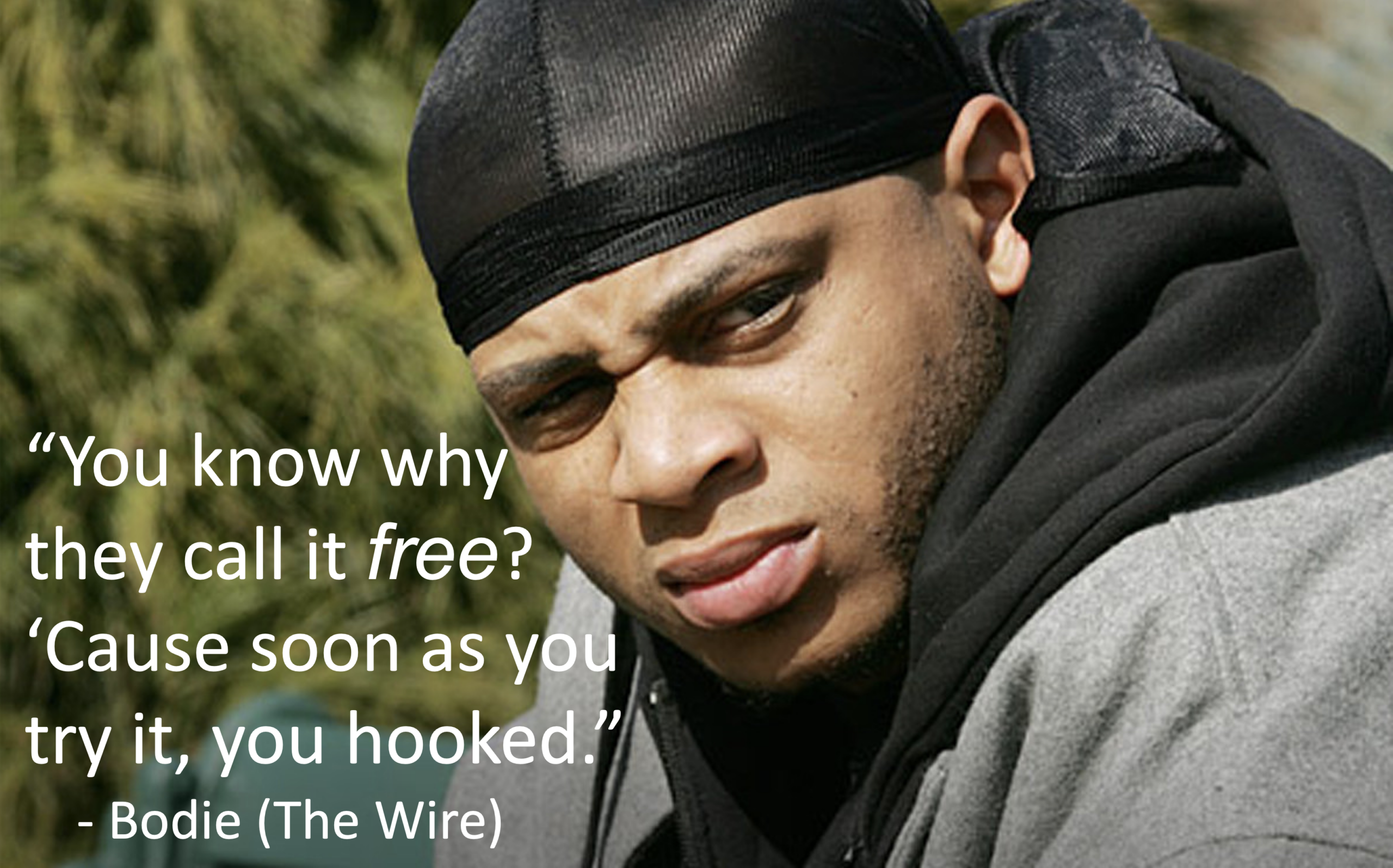
The reality: The business model wasn’t sustainable. Uber lost money on every ride, but the investors were playing the long game: Disrupt the taxi market, exploit network effects, emerge as the dominant player, exert pricing power. It’s Avon Barksdale and Stringer Bell’s strategy in The Wire. Free heroin until your customers are hooked.
Now, OpenAI and Google and Microsoft are running the same playbook, only they don’t have their sights set on a single industry (like taxis or heroin). They’re targeting work itself. Their current model isn’t sustainable. All of this private money is subsidizing adoption, forcing businesses to invest or face extinction.
They promise a world of abundance. They assure us costs will plummet. But is that true? What happens when everyone’s adopted the tech? That $10 taxi ride that was a $5 Uber ride now can cost $25 with surcharges, congestion pricing, and demand-based pricing.
Lest you think Uber is an anomaly, look at the pricing strategies of DoorDash and Netflix and Amazon . Cory Doctorow has dubbed this phenomenon Enshittification:
“Here is how platforms die: first, they are good to their users; then they abuse their users to make things better for their business customers; finally, they abuse those business customers to claw back all the value for themselves. Then, they die. I call this enshittification, and it is a seemingly inevitable consequence arising from the combination of the ease of changing how a platform allocates value, combined with the nature of a “two-sided market”, where a platform sits between buyers and sellers, hold each hostage to the other, raking off an ever-larger share of the value that passes between them.”
At some point, someone has to pay for these data centers and GPUs. Someone who’s not an investor. “But this time is different,” they say. AGI and Super Intelligence will strip out so much cost, we’ll all have Universal High Income.
What if we don’t get there? What if the technology or adoption stalls out before Super Intelligence? What happens if the smart-money hypotheses don’t prove out? Do we land in a world of AI junkies scraping by to get their next fix?
Don’t worry. History suggests not everyone loses on the road to Enshittification. Uber’s worth almost $200 billion.