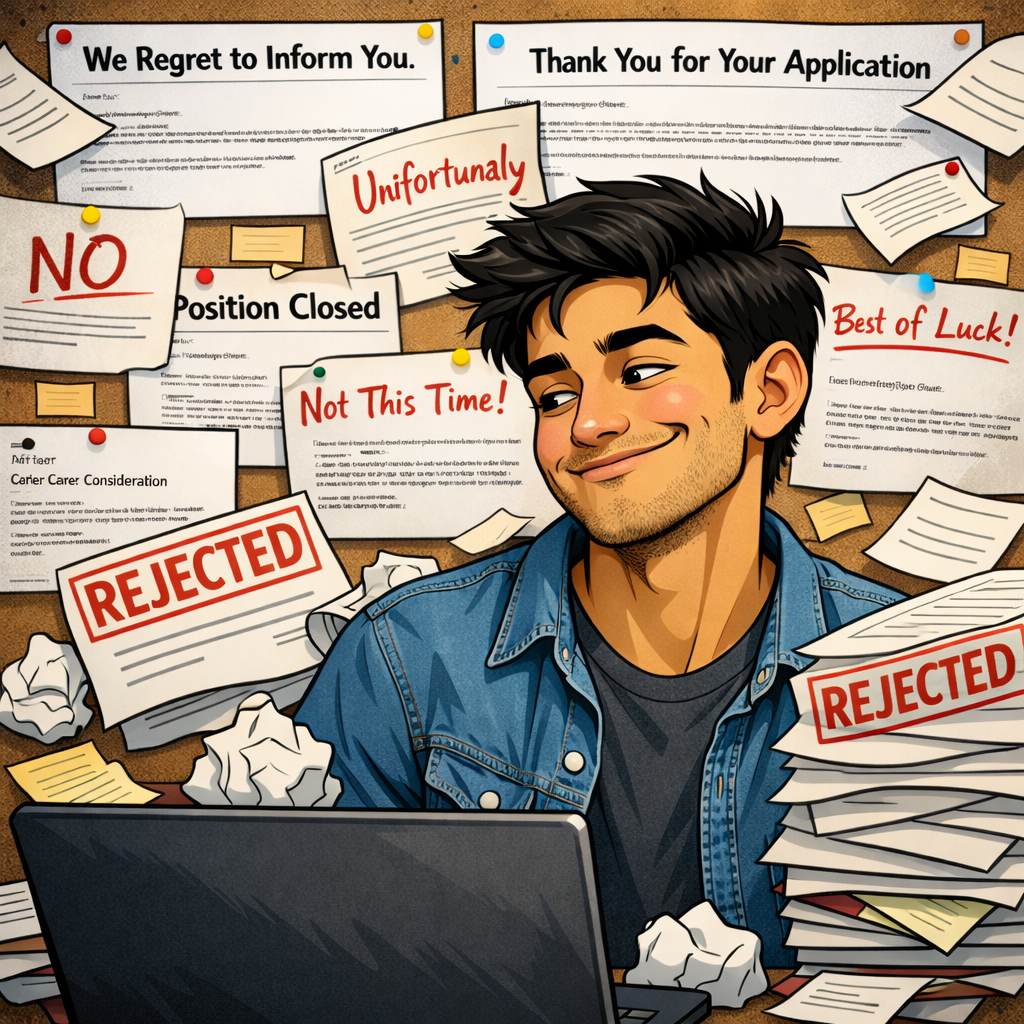
It’s a tough job market. Toughest we’ve seen outside of an economic downturn. There’s fear, confusion, uncertainty, and a lot of noise.
It’s enough to make you cry. Or want to punch a wall.
My advice? Keep smiling.
Soul Crushing Rejection
If you’re like most job seekers, you’ve diligently responded to postings– you’ve crafted cover letters and tweaked your resume only to hear… well… nothing. The only thing worse might be when you’ve heard something– getting invited to a video interview, maybe even a live interview, thinking it went well– only to hear… well… nothing. Or “you were great, but we’ve decided to go a different direction.”
Tough to smile when you question your own worth. Or the fairness of the game. Do yourself a favor: Smile anyway.
I get it. Rejection can be soul crushing. Our identity is shaped by the stories we tell ourselves. When you don’t have a job, you don’t have an ending to the what-do-you-do story that allows you to figure out what dots matter. Rejection brings on embarrassment and shame, never mind the financial hardship which can induce spiraling worries about unpaid bills and unmet needs, both now and in the future.
Long way of saying, searching for a job can suck.
But keep smiling.
Here’s what you can’t do?
You can’t feel sorry for yourself and you can’t count yourself a victim. The reality: Maybe you picked a once-desirable major with now grim prospects or maybe you did get a raw deal in an interview. Maybe the system’s broken, and others have inside tracks you don’t have. Maybe your brother graduated three years ago and weighed multiple offers with signing bonuses.
It’s not fair.
Wallowing in that unfairness will not get you a job.
What will? Persistence, determination, creativity, diligence, discipline, and… well… you know… all of the virtues you read about on LinkedIn. I can feel you rolling your eyes. Trust me, I was rolling my eyes as I listed them. They’re true… but they’re also unhelpful for someone who’s replied to 437 job postings to secure four video interviews and one actual live interview.
So what is helpful? A mental reframe and a plan.
But first, a quick story…
Advice from Some Drunk Woman
At 22, I attended a gala charity event. I worked for the charity, which paid me room, board, and $200 a month stipend. At the gala, I did what poor 22-year-olds do at an open bar; I ate as much shrimp and drank as much beer as any human could in the allotted three hours.
Late in the night, some drunk woman cornered me. She was old– like, before electricity old. And she could talk. Had probably swallowed her weight in gin.
I thought she might try to kick me out, but she seemed to have taken a liking to me and the other 20-somethings who had signed on for a year of service. She slurred some maxims about good days and bad days, eventually arriving at her point. “Whatever happens,” she said, “Keep smiling.”
I nodded politely and took a pull of my beer.
And then she furrowed her brow, took a big swig of her martini, and spit the next four words at me: “It confuses the bastards.”
More than mindfulness or journaling or a gratitude practice, that story has helped me deal with life’s challenges and my monkey mind’s proclivity for drawing unhelpful conclusions about those challenges. It’s helped me retain agency, and agency in your job search (and in life) is almost everything.
You are not defined by rejection.
When things are grim: Keep smiling. It confuses the bastards.
And Now, the Mental Reframe
We think of adversity as something to survive. But what if we embraced it as the thing that makes us stronger? We don’t just survive tough times, we are shaped by them. The best salespeople often learned to sell during a downturn. Many of the best companies emerge from recessions. Heck, the “Greatest Generation” grew up during the Great Depression.
Nassim Taleb calls this antifragility. And you need to make this part of your identity. Every slight is a lesson. Every rejection a log on your fire. Nelson Mandela said, “I never lose. I either win or I learn.” Nelson Mandela was antifragile.
Right now, you’re learning a lot. It will make you stronger. And hungrier.
Keep smiling. It confuses the bastards.
From there, Build the Plan
A nice story and a mental reframe will fade if you don’t have a plan. And doing what you’ve been doing will not likely yield different results (I’m sure you’ve heard the Einstein quote). You need to redefine how you approach your job search. How you show up every day, and how you show up to potential hiring managers.
You need to build the plan, and you need to hold yourself accountable to executing it. But here’s a wrinkle: Plans are often worth less than planning. They don’t survive the real world. You’ll have to adapt. That’s part of the process, and that’s okay. It’s better than okay. When others are discouraged and defeated, know that you’re going the extra mile to be different. You’re antifragile
So, what should you consider when formulating your plan? How to stand out. Right now, everyone is turning their resume and cover letter into llm-generated matches for recruiting algorithms. Stop wasting your time. You’re adding your needle to a pile of needles, not helping some company find you in a haystack.
Here are some suggestions to be different…
𝗘𝗶𝗴𝗵𝘁 𝗪𝗮𝘆𝘀 𝘁𝗼 Stand Out 𝗗𝘂𝗿𝗶𝗻𝗴 𝗬𝗼𝘂𝗿 𝗝𝗼𝗯 𝗦𝗲𝗮𝗿𝗰𝗵
𝟭. 𝗠𝗮𝗸𝗲 𝗬𝗼𝘂𝗿 𝗦𝗲𝗮𝗿𝗰𝗵 𝗮 𝗖𝗼𝗻𝘁𝗮𝗰𝘁 𝗦𝗽𝗼𝗿𝘁.
While others complain about sending résumés into the abyss, set a weekly target for real conversations—IRL or live on the phone. Then beat that target. Every week. No happy hour on Friday until you’ve set enough meetings for the coming week. If you say you’re going to do it, you’d better do it.
𝟮. 𝗟𝗲𝘃𝗲𝗿𝗮𝗴𝗲 𝗟𝗼𝗼𝘀𝗲 𝗖𝗼𝗻𝗻𝗲𝗰𝘁𝗶𝗼𝗻𝘀.
Most people stop networking when they’ve reached out to their close circle. Go further. Reach out to second-degree connections. Ask about their path, and share why you’d be an asset if an opportunity comes their way. They know people you don’t know. And you’ll be surprised how many people are willing to help… if you just ask.
𝟯. 𝗚𝗮𝗺𝗶𝗳𝘆 𝗥𝗲𝗷𝗲𝗰𝘁𝗶𝗼𝗻.
Silence or “no” isn’t a verdict on your worth—it’s just “not yet.” Treat it like data. If four out of 30 informational requests replied, how can you get that to 10 next week? It’s a game, not a judgment. The most successful people I know treat rejection like a challenge. It stokes their competitive fire and stimulates their creativity.
𝟰. 𝗟𝗲𝗮𝗿𝗻 𝗡𝗼𝗻-𝗦𝘁𝗼𝗽.
When others doom-scroll, you pick up a book, take a course, or learn a skill. Be ready to talk about what you’re learning in every interview. Hiring managers aren’t just hiring for a job; they’re looking for a teammate who will solve problems and take initiative.
𝟱. 𝗙𝗹𝗶𝗽 𝘁𝗵𝗲 𝗦𝗰𝗿𝗶𝗽𝘁.
Companies run thousands of candidates through funnels. Don’t play that game. Build 𝘺𝘰𝘶𝘳 funnel. Apply 𝘺𝘰𝘶𝘳 filters. Know the criteria for roles where you’ll thrive. You show up differently when you’re interviewing them too. And rather than playing whack-a-mole with every posting you see, you can research companies, connect with people, and work your search from the narrow out.
𝟲. 𝗙𝗶𝗻𝗱 𝗔𝗱𝘃𝗼𝗰𝗮𝘁𝗲𝘀.
Go the extra mile to see who you know inside the company—or who knows the interviewer. Ask that person to send a short note advocating for you. Warm intros move you to the top of a pile. Again, you’ll be amazed at how many people are willing to help you… say it with me… if you just ask!
𝟳. 𝗚𝗲𝘁 𝗖𝗿𝗲𝗱𝗶𝘁 𝗳𝗼𝗿 𝗬𝗼𝘂𝗿 𝗪𝗼𝗿𝗸.
Don’t just research a company—let them know that you did. Use lines like:
“When I read your annual report…”
“After speaking with a friend-of-a-friend who works here…”
“I loved your CEO’s quote in the Wall Street Journal last week…”
It shows initiative and seriousness.
𝟴. 𝗛𝗮𝗻𝗱𝘄𝗿𝗶𝘁𝗲 𝗬𝗼𝘂𝗿 𝗧𝗵𝗮𝗻𝗸-𝗬𝗼𝘂 𝗡𝗼𝘁𝗲𝘀.
After every interview, don’t stop after the perfunctory LinkedIn connection request. Write a handwritten note referencing a moment from the conversation that stuck with you. Do the same for anyone who helps you along the way. It’s not weird. It’s not “too much.” It’s appreciated. Always.
Keep Smiling
If this doesn’t work or doesn’t work quickly. Keep smiling.
Victims don’t win. Optimists do… When they retain their agency… And have a plan.
It can feel like the world is crashing down on you. But your story’s not written. This is an early chapter, maybe even an introduction. You hold the pen.
Good luck. Keep grinding. Things will break for you, and you’ll be better for it. The world will be better for it because you can and will make a difference. You have to know that and believe it.
Whatever happens, keep smiling.
You got this!